

Varanasi’s ghats are riverfront steps along the Ganges, and Dashashwamedh, Assi and Manikarnika are among the names that define this stretch of the city.
From Hotel Premiere Villa, plan the ghats as a city outing: the riverfront combines bathing and puja sites with cremation ghats, and a morning boat ride is a popular way to view them. A one-day Varanasi route from Hotel Premiere Villa can place the riverfront within your day.
- Varanasi has 88 ghats.
- Most ghats are used for bathing and puja ceremonies; two are used exclusively as cremation sites.
- A morning boat ride across the ghats is a popular visitor attraction.
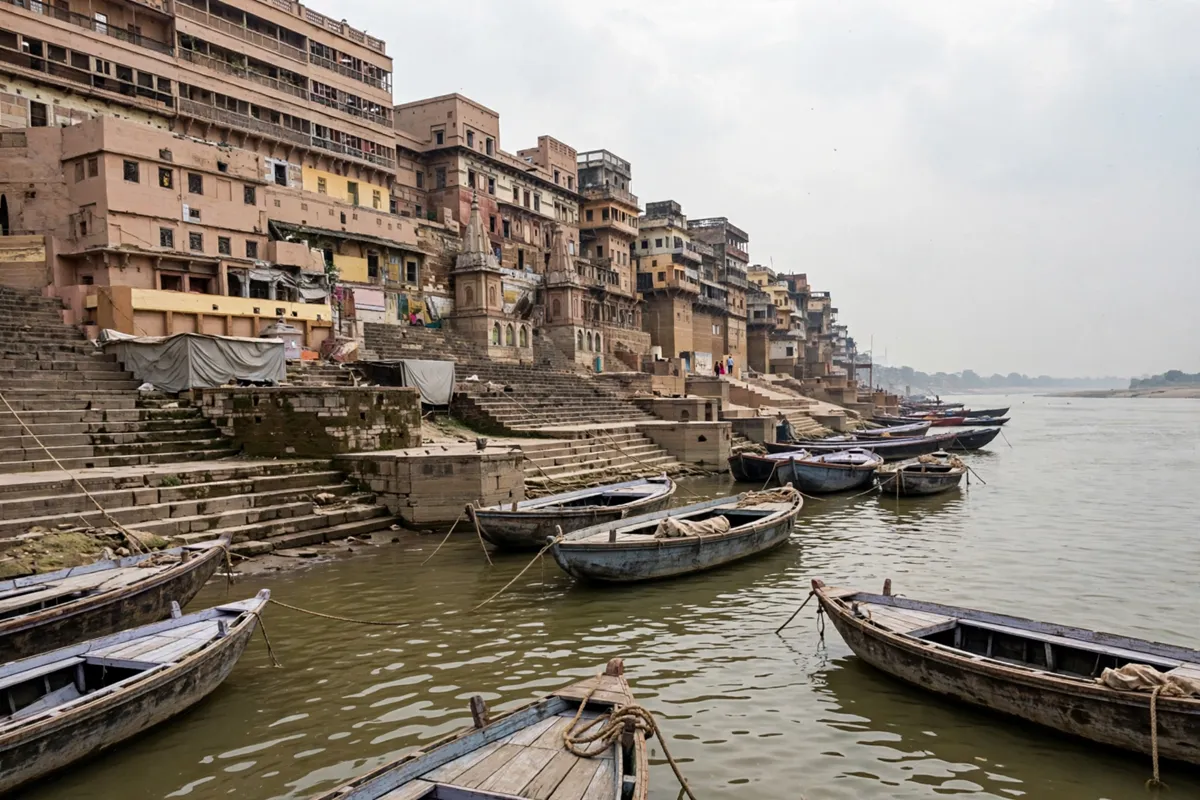
How the ghats line the riverfront
The ghats form a sequence of steps leading to the banks of the River Ganges. They are not all used in the same way: most serve bathing and puja ceremonies, while two are exclusively cremation sites.
Many ghats are associated with legends or mythologies, and many are privately owned. Their present-day appearance also reflects a period of rebuilding: most were reconstructed after 1700 AD, when Varanasi was part of the Maratha Empire. Marathas, Shindes (Scindias), Holkars, Bhonsles and Peshwes (Peshwas) were among the patrons of the present ghats.
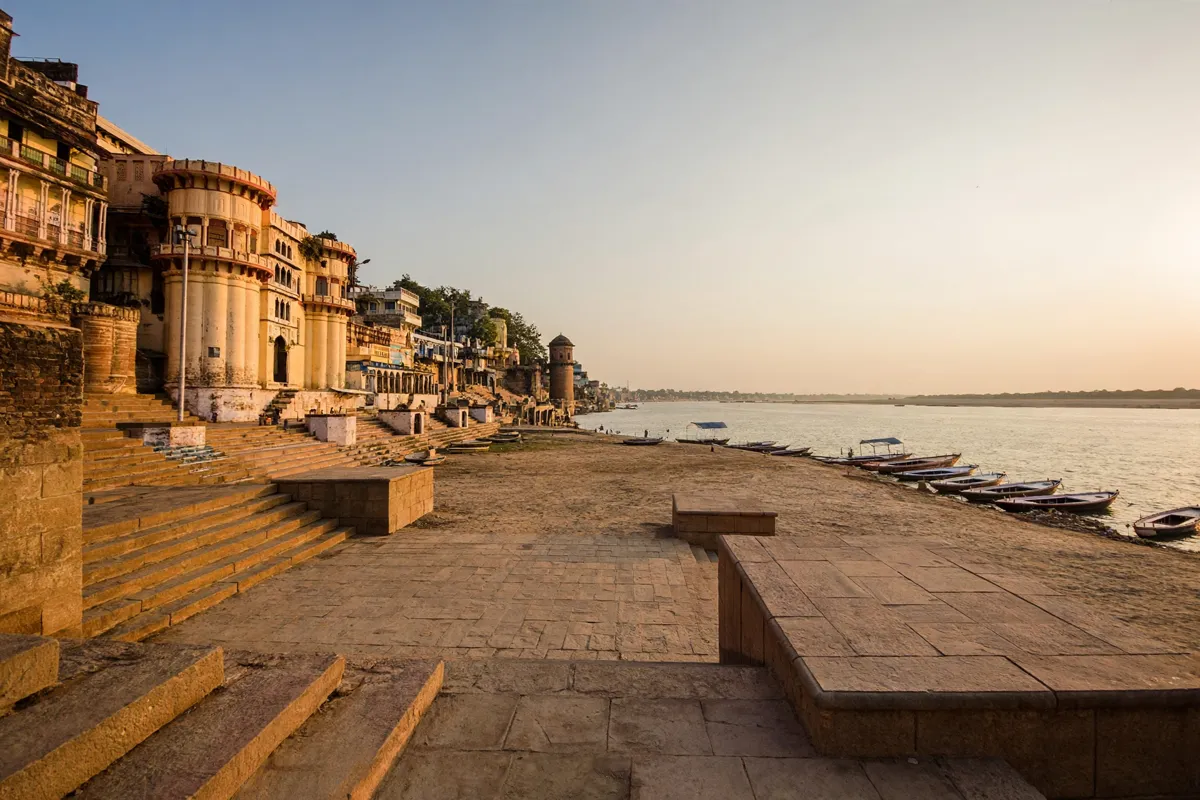
Starting at Assi Ghat
Assi Ghat is a riverfront starting point with a floating pontoon jetty for passenger vessels. The jetty is managed by the Inland Waterways Authority of India, making Assi relevant both to a walk along the steps and to the river’s passenger-vessel activity.
Take in the riverfront from the ghat before deciding whether to continue along the steps or view the ghats from the water.
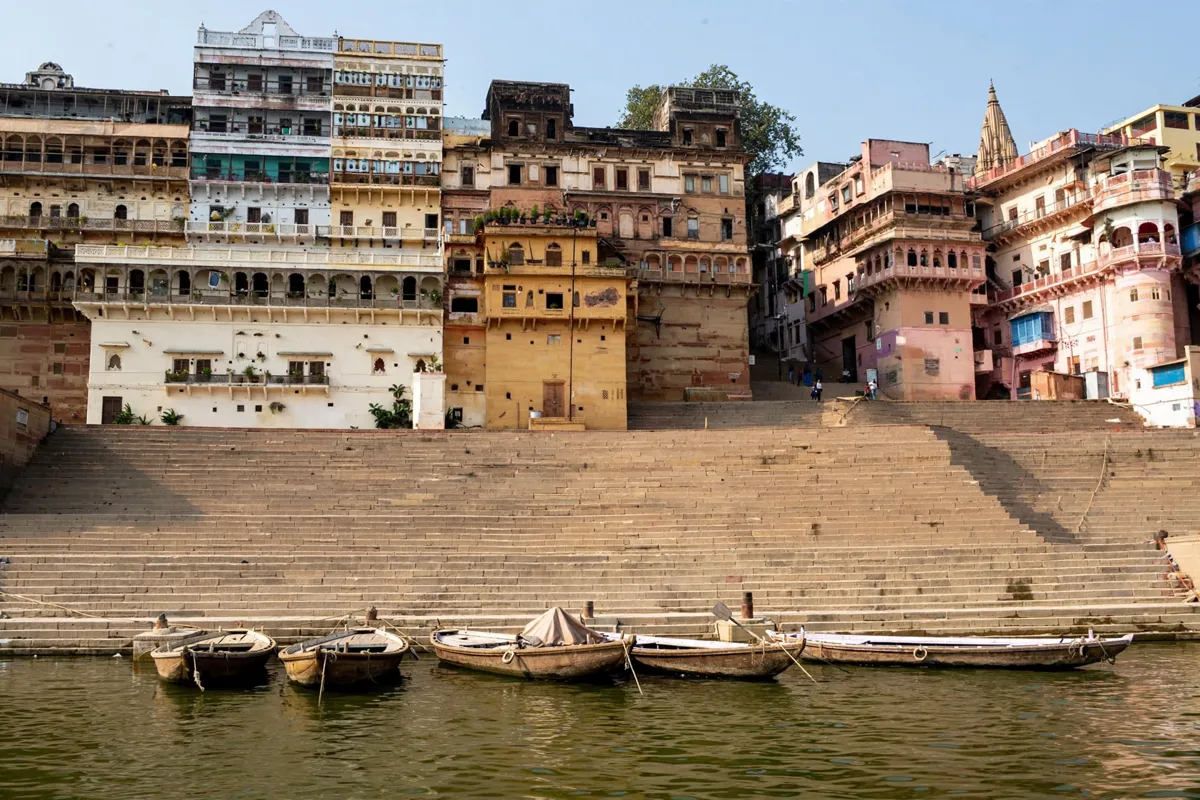
Walking north toward Dashashwamedh Ghat
Dashashwamedh Ghat is one of the riverfront landmarks to include when exploring Varanasi’s ghats. Its place in a walk is best understood as part of the broader sequence of steps and river access points, rather than as a separate attraction detached from the Ganges.
If you are planning to attend the Ganga Aarti at Dashashwamedh Ghat, keep that as a separate timing question from the walk itself. The ceremony has its own visitor-planning considerations, while this route guide focuses on the ghats and their differing uses.
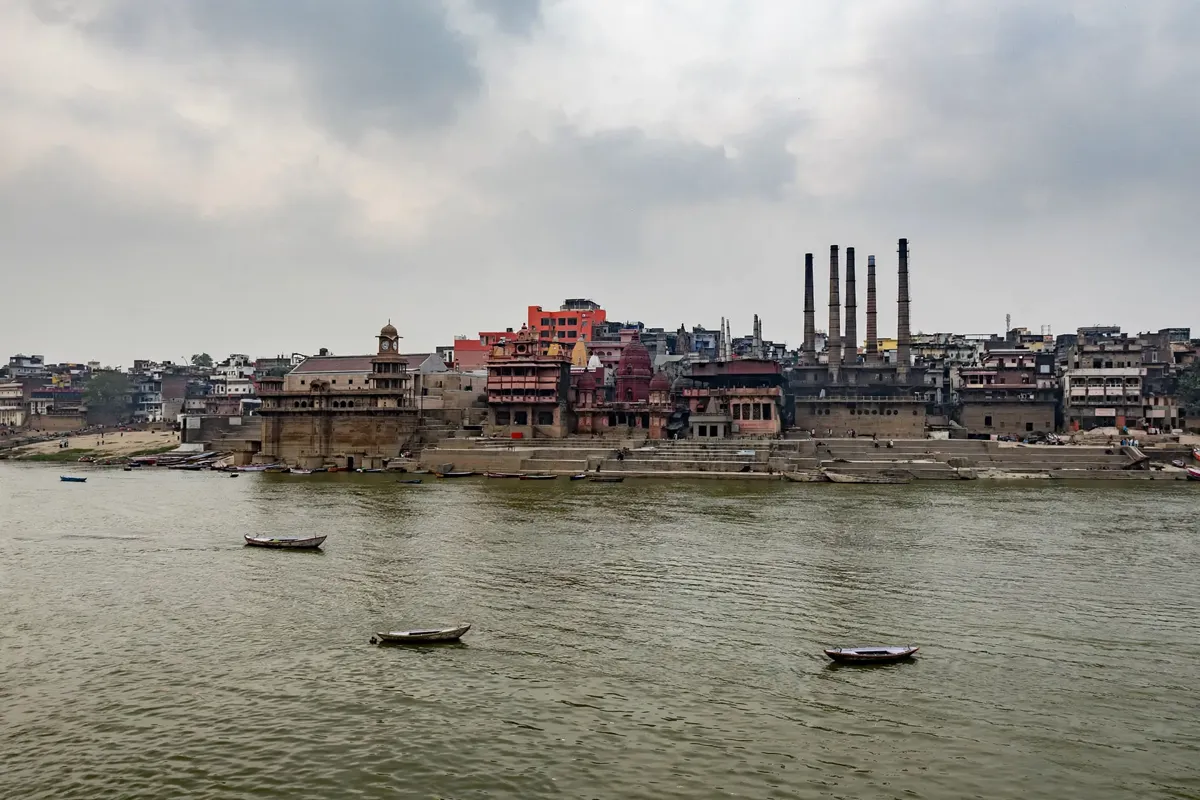
Understanding Manikarnika Ghat respectfully
Manikarnika Ghat belongs to the cremation-site context of Varanasi’s riverfront. Two ghats are used exclusively for cremation, so approach this part of the riverfront with care and respect for its purpose.
Keep your attention on the setting and the public riverfront rather than treating cremation activity as a spectacle. The ghats are working places as well as significant parts of the city’s cultural landscape.
Steps, access and practical walking advice
Expect the ghats to be a varied riverfront of steps, with bathing, puja and cremation uses depending on the site. That variety is the main practical point to bear in mind as you move between public river access and places with a more specific role.
Because many ghats are privately owned, not every stretch should be assumed to have the same access or use. Give space to ceremonies and everyday activities, and ask locally if you are unsure where to walk or pause.
If you plan to include a temple visit in your day, consult this guide to visiting Kashi Vishwanath Temple.
When to combine the walk with a boat ride
A morning boat ride on the Ganges is a popular way to see the ghats from the water. It offers a different perspective from walking the steps, where the focus is on the individual riverfront sites and their uses.
Assi Ghat has a floating pontoon jetty managed by the Inland Waterways Authority of India for passenger vessels. Before you go, check the official Inland Waterways Authority of India site for relevant passenger-vessel information and check the official site before you go.
FAQs
How many ghats are in Varanasi?
Varanasi has 88 ghats, described as riverfront steps leading to the banks of the Ganges.
Are all the ghats used for the same purpose?
No. Most are used for bathing and puja ceremonies, while two are used exclusively as cremation sites.
Can you see the ghats by boat?
Yes. A morning boat ride on the Ganges across the ghats is a popular visitor attraction.
Why do many ghats have their present form?
Most were rebuilt after 1700 AD, when Varanasi was part of the Maratha Empire.